
BASE DEVICE
PCA9535
16-bit I²C / SMBus I/O expander with interrupt output.
- I/O width
- 16 bit
- Supply voltage
- 2.3–5.5 V
- I/O tolerance
- 5 V
NXP Semiconductors / Chips & IP
Select the physical layer and signal conditioning for the required bus.
Product lines are representative. Stock, lifecycle, package and grade must be checked against the exact MPN.
FROM FAMILY TO DEVICE
Base-device names are distinct from full ordering numbers. Each detail page identifies the product type, parameter scope and official source.
BASE DEVICE
16-bit I²C / SMBus I/O expander with interrupt output.
BASE DEVICE
High-speed CAN transceiver with separate I/O-supply pin.
2 device references
No model matches this search. Clear the filter or send the exact part number for review.
Browse the full NXP Semiconductors product map →
WITHIN THIS PRODUCT LINE
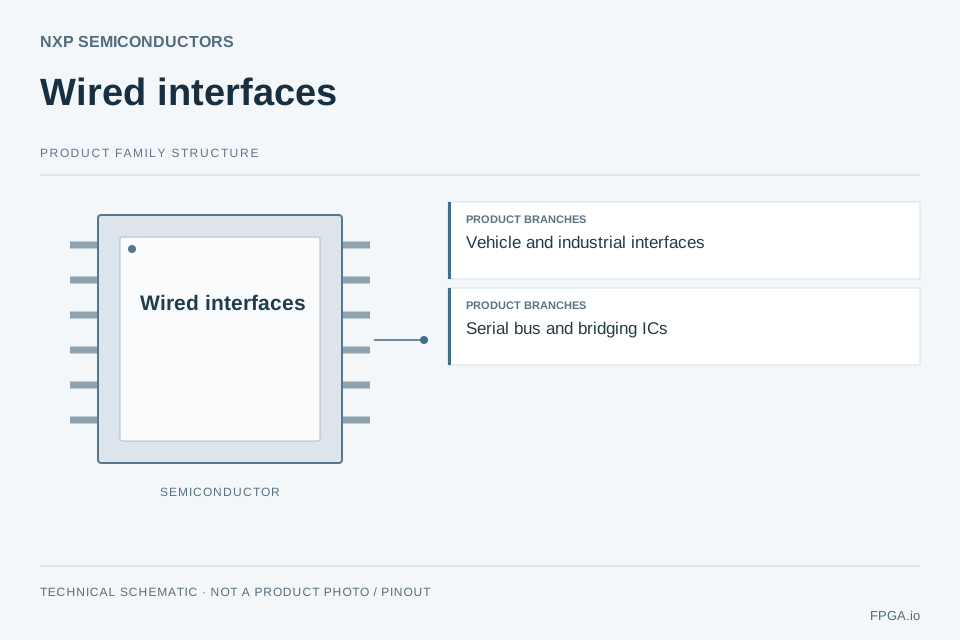
Portfolio includes CAN, LIN and Ethernet categories.
1 device refs · 2 ordering codesExplore Vehicle and industrial interfaces →I2C, SPI, I3C, USB and bridge categories support board interconnection.
1 device refs · 7 ordering codesExplore Serial bus and bridging ICs →SELECTION CONTEXT
Select the physical layer and signal conditioning for the required bus.
Use the requirements below to decide which specification limits your design. A family name alone is not a purchasing specification.
Choose the complete device and ordering code before checking package pinout, power, electrical limits and operating grade. Keep family maxima separate from a selected device or package.
Open the manufacturer reference ↗ENGINEERING DECISIONS
Use these checks to define the requirement. Family names alone do not establish performance, package compatibility or current availability.
Identify the complete manufacturer part number, package, operating grade and electrical requirements. Reviewed FPGA specifications can then be compared at device level.
Send the exact project requirement →Bring the BOM, schematic constraints, stack-up and assembly requirements into the project brief.
PCBA project preparation →EVIDENCE & DEVELOPMENT
Start with the device table, then check electrical limits, ordering information and the applicable tool release.
Find schematics, quick-start material and software links; some downloads require an account.
Check board support against the chosen SDK release.
Find software and device-support information.
These broader manufacturer resources do not establish support or compatibility for every device on this page.
PRACTICAL QUESTIONS
Start with the documented product scope: Select the physical layer and signal conditioning for the required bus. Then compare the device-specific facts below with your required resources and interfaces. Open each model for its evidence and ordering constraints.
A base-device identifier identifies the silicon or model, but may omit package, speed, temperature, qualification and packing options. Use the manufacturer ordering table to establish the complete code. Reference examples do not establish stock or an approved replacement.
A shared family or manufacturer does not establish pin compatibility. Compare pinout, supply and I/O-bank voltages, configuration, timing, tool support and thermal limits before changing a board.
Provide the exact part or board revision, quantity, delivery requirement, operating environment and traceability needs. For assembly, identify BOM readiness, PCB stack-up, programming access and the inspection or functional-test scope.
PREPARE A USEFUL INQUIRY
Select the points you want our team to review. Your selections stay in this browser until you choose to submit the quotation form.
Open quotation form →NXP Semiconductors Wired interfaces reference ↗
Source review: 2026-09-28. This family guide does not assert stock or compatibility between devices.
← Complete NXP Semiconductors product map