
Compare architectures.
Workload, interfaces and trade-offs between processors, programmable logic and dedicated devices.
FPGA.io / INDUSTRY INSIGHTS
Explore the electronics behind servers, communication networks, precision instruments and complex equipment. Start with the application; leave with the questions your next design review needs to answer.
Explore industries ↓FIND YOUR APPLICATION
Choose a sector or search a system, interface or engineering concern.
48 application briefs across 12 industries
Reset filtersServers, accelerators, storage and rack infrastructure.
Explore applications →02 / 4 applicationsBase stations, radio units, transport and precision timing.
Explore applications →03 / 4 applicationsOscilloscopes, RF instruments, acquisition and protocol analysis.
Explore applications →04 / 4 applicationsATE, wafer inspection, motion stages and packaging equipment.
Explore applications →05 / 4 applicationsRobotics, motion control, industrial networks and condition monitoring.
Explore applications →06 / 4 applicationsMachine vision, high-speed cameras, optical sensing and displays.
Explore applications →07 / 4 applicationsImaging, laboratory instruments and biological measurement systems.
Explore applications →08 / 4 applicationsSpace electronics, ground equipment, flight testing and inspection payloads.
Explore applications →09 / 4 applicationsGrid monitoring, storage, conversion and charging infrastructure.
Explore applications →10 / 4 applicationsVehicle compute, rail electronics, roadside systems and marine sensing.
Explore applications →11 / 4 applicationsAccelerators, quantum laboratories, telescopes and large experiments.
Explore applications →12 / 4 applicationsLive production, video routing, encoding and precision audio.
Explore applications →Try a broader term, choose another industry or reset the filters. You can also bring a new application to the engineering discussion.
Ask an engineering question →EXPLORE / QUESTION / PREPARE
Planning prompts, not verified BOMs or customer case studies. Expand a system to see what to gather.
Start with the workload and host software. Compare CPU, GPU, dedicated silicon and FPGA paths against sustained throughput, power and integration effort.
Illustrative system pathHost CPU → accelerator / memory → fabric
Server processors, GPU/FPGA accelerators, memory, power controllers.
Where is the measured bottleneck: compute, memory movement, host I/O or cooling?
Workload profile, host interface map, power envelope and software ownership.
Check package, grade, official documents, lifecycle and software support before selecting a part.
Illustrative system pathNetwork ports → packet pipeline → host / storage
Network controllers, programmable logic, transceivers, clocks.
Which packet operations need offload, and how will worst-case latency be measured?
Traffic profiles, port map, packet-loss criteria and host-driver requirements.
Check package, grade, official documents, lifecycle and software support before selecting a part.
Illustrative system pathStorage media → controller / switch → host fabric
Storage controllers, PCIe switches, memory, power protection.
How do queue depth, recovery and power-loss behavior change the architecture?
Capacity and endurance targets, interface topology and recovery test plan.
Check package, grade, official documents, lifecycle and software support before selecting a part.
Illustrative system pathRail / thermal sensors → controller → management network
Management processors, CPLDs, sensors, supervisors, PMICs.
Who owns sequencing, fault response and remote firmware recovery?
Rail sequencing, telemetry list, update policy and service-access requirements.
Check package, grade, official documents, lifecycle and software support before selecting a part.
Keep radio, transport and timing budgets separate. A headline interface rate does not establish useful payload throughput or end-to-end synchronization.
Illustrative system pathAntenna / RF → radio processing → fronthaul / baseband
RF transceivers, converters, FPGA/SoC, clocking, power devices.
Which split, channel bandwidth and antenna count define the processing and transport load?
Functional split, radio-channel matrix, fronthaul budget and timing requirements.
Check package, grade, official documents, lifecycle and software support before selecting a part.
Illustrative system pathRF front end → modem processing → network interface
RF devices, converters, programmable logic, Ethernet interfaces.
How do modulation, channel conditions and link availability affect buffering and processing?
Link assumptions, bandwidth targets, interface map and environmental envelope.
Check package, grade, official documents, lifecycle and software support before selecting a part.
Illustrative system pathOptical module → framing / switching → network fabric
Optical control ICs, retimers, network silicon, FPGA, power devices.
Which protocols, lane rates and module power states must the board support?
Lane map, protocol versions, signal-integrity plan and module-management requirements.
Check package, grade, official documents, lifecycle and software support before selecting a part.
Illustrative system pathReference clock → synchronization engine → distributed nodes
Clock generators, jitter cleaners, timing processors, programmable logic.
What are the reference-loss behavior and allowed timing error at each endpoint?
Clock tree, holdover assumptions, synchronization budget and measurement points.
Check package, grade, official documents, lifecycle and software support before selecting a part.
Measurement accuracy depends on the analog chain, calibration, clocks and test conditions. Digital resource counts alone cannot prove instrument performance.
Illustrative system pathAnalog front end → ADC → trigger / capture memory → host
Amplifiers, ADCs, clocking, FPGA/SoC, memory.
What sample rate, resolution, channel count and capture length must operate together?
Acquisition budget, trigger requirements, analog limits and calibration approach.
Check package, grade, official documents, lifecycle and software support before selecting a part.
Illustrative system pathRF conditioning → ADC / DAC → digital processing → control
RF signal-chain ICs, data converters, synthesizers, DSP/FPGA.
Which bandwidth, noise and dynamic-range targets need independent measurement?
Frequency plan, signal-chain budget, calibration references and test conditions.
Check package, grade, official documents, lifecycle and software support before selecting a part.
Illustrative system pathSensors → conditioning → synchronized conversion → storage
Precision amplifiers, ADCs, isolation, clocks, MCU/FPGA.
How are channel alignment, input protection and drift characterized?
Channel matrix, accuracy budget, isolation needs and sustained logging requirements.
Check package, grade, official documents, lifecycle and software support before selecting a part.
Illustrative system pathLink under test → capture / pattern engine → analysis host
High-speed transceivers, FPGA, retimers, memory, clocking.
Which protocol revisions and electrical conditions must be generated or observed?
Protocol coverage, lane map, reference clock plan and acceptance test matrix.
Check package, grade, official documents, lifecycle and software support before selecting a part.
Separate equipment control from measurement and protection. Define serviceability, calibration and long-life component support before freezing the board.
Illustrative system pathPattern / timing engine → device interface → capture / analysis
FPGA, pin electronics, converters, precision clocks, power ICs.
How do test-site count, timing resolution and device interfaces scale together?
Pin map, pattern budget, synchronization plan and fixture revision control.
Check package, grade, official documents, lifecycle and software support before selecting a part.
Illustrative system pathOptical sensors → acquisition → image processing → defect review
Image sensors, analog front ends, FPGA/GPU, memory, links.
Can acquisition and processing sustain the scan without losing inspection data?
Pixel/data budget, scan synchronization, calibration and host-transfer plan.
Check package, grade, official documents, lifecycle and software support before selecting a part.
Illustrative system pathPosition feedback → real-time control → actuator interface
Encoder interfaces, converters, real-time processors, isolation.
What jitter, feedback delay and independent protection are required?
Axis timing, feedback interfaces, motion envelope and protection responsibilities.
Check package, grade, official documents, lifecycle and software support before selecting a part.
Illustrative system pathVision / process sensors → coordination → machine actuators
MCU/SoC, vision interfaces, FPGA, motor and power devices.
How will process measurements be associated with the correct unit and recipe?
Sensor map, recipe/version records, traceability fields and controller interfaces.
Check package, grade, official documents, lifecycle and software support before selecting a part.
An FPGA is one implementation option for parallel I/O or timing. Compare it with real-time processors and dedicated controllers; document independent protection functions.
Illustrative system pathEncoders / sensors → coordinated control → drive interface
Real-time processors, FPGA, encoder ICs, isolation, power devices.
Which axes and sensor interfaces share a timing deadline?
Axis/channel matrix, synchronization targets and separation of control and protection.
Check package, grade, official documents, lifecycle and software support before selecting a part.
Illustrative system pathField interfaces → protocol bridge → plant network
Ethernet PHYs, processors, FPGA, isolation, secure elements.
Which network schedules and legacy interfaces must coexist?
Protocol matrix, timing limits, port isolation and update/maintenance policy.
Check package, grade, official documents, lifecycle and software support before selecting a part.
Illustrative system pathCurrent / position feedback → control → gate-drive stage
Converters, control processors, isolators, gate drivers, power switches.
How are sensing delay and fault shutdown verified independently?
Control-loop assumptions, power-stage scope, sensing map and fault-test responsibilities.
Check package, grade, official documents, lifecycle and software support before selecting a part.
Illustrative system pathVibration / current sensors → acquisition → analysis → gateway
Sensors, low-noise amplifiers, ADCs, MCU/FPGA, communications ICs.
What bandwidth and recording window are needed to capture the event of interest?
Sensor placement assumptions, sampling plan, storage budget and detection validation data.
Check package, grade, official documents, lifecycle and software support before selecting a part.
Evaluate the whole path from exposure to host memory. A processor choice needs the actual pixel format, number of streams, latency and optical constraints.
Illustrative system pathSensor → acquisition → buffering / processing → host
Image sensors, interface ICs, FPGA/SoC, memory, power devices.
What are the pixel format, frame rate and number of simultaneous streams?
Image-bandwidth budget, interface map, latency target and inspection data set.
Check package, grade, official documents, lifecycle and software support before selecting a part.
Illustrative system pathSensor array → parallel capture → frame buffer → recorder
Sensor interfaces, FPGA, high-bandwidth memory, host-link devices.
How long can the camera sustain a burst before buffering or output becomes limiting?
Burst/capture budget, synchronization triggers, thermal envelope and storage plan.
Check package, grade, official documents, lifecycle and software support before selecting a part.
Illustrative system pathDetector → analog conditioning → conversion → spectral analysis
Photodetector front ends, converters, clocks, DSP/FPGA.
Which detector noise and calibration effects dominate the result?
Optical assumptions, acquisition window, calibration procedure and processing budget.
Check package, grade, official documents, lifecycle and software support before selecting a part.
Illustrative system pathVideo input → processing / timing → display interface
Video receivers, FPGA/SoC, timing devices, display drivers.
Which resolution, synchronization and latency combinations need support?
Format matrix, frame-buffer requirements, clock map and image-quality criteria.
Check package, grade, official documents, lifecycle and software support before selecting a part.
These are electronics planning prompts. Device selection does not establish clinical performance, patient safety or regulatory qualification; those require the equipment team's own evidence.
Illustrative system pathTransducer interface → analog front end → processing → host
Ultrasound AFEs, converters, FPGA/SoC, memory, power devices.
How do channel count, synchronization and data movement constrain the electronics?
Channel/data budget, interface conditions and assigned system-verification responsibilities.
Check package, grade, official documents, lifecycle and software support before selecting a part.
Illustrative system pathDetector electronics → synchronized acquisition → reconstruction host
Detector AFEs, ADCs, FPGA, memory, high-speed interfaces.
What timing, data integrity and calibration evidence is required from the readout chain?
Detector interface specification, acquisition timing and traceable data-path tests.
Check package, grade, official documents, lifecycle and software support before selecting a part.
Illustrative system pathOptical / fluidic sensors → acquisition / control → analysis host
Precision analog, converters, motor controls, processors, interfaces.
How are measurements tied to the correct sample, calibration and hardware revision?
Channel map, sample-tracking interface, calibration records and test ownership.
Check package, grade, official documents, lifecycle and software support before selecting a part.
Illustrative system pathOptical detector → low-noise acquisition → processing → workstation
Low-noise amplifiers, ADCs, clocks, FPGA/processor, memory.
Which measurement interval and noise sources govern the acquisition design?
Signal/noise assumptions, synchronization plan and reproducible electronic test conditions.
Check package, grade, official documents, lifecycle and software support before selecting a part.
Keep mission/environment qualification separate from the functional architecture. The applications listed here do not establish flight heritage or qualification of FPGA.io services.
Illustrative system pathScientific sensors → payload processing → onboard data interface
Qualified processors/FPGA, converters, memory, power devices.
Which environment, fault recovery and parts-screening requirements belong to the mission?
Mission constraints, interface control document and component qualification evidence list.
Check package, grade, official documents, lifecycle and software support before selecting a part.
Illustrative system pathRF front end → modem / processing → terrestrial network
RF devices, converters, FPGA/SoC, timing and network ICs.
What bandwidth, synchronization and host interfaces define the ground equipment?
Frequency/interface plan, data budget, environmental scope and verification conditions.
Check package, grade, official documents, lifecycle and software support before selecting a part.
Illustrative system pathInstrumentation sensors → timestamped capture → storage
Converters, programmable logic, timing, storage and interface ICs.
How are timestamps, data gaps and recovery behavior recorded for later analysis?
Channel/timestamp specification, retention budget and environmental test scope.
Check package, grade, official documents, lifecycle and software support before selecting a part.
Illustrative system pathCamera / sensors → payload processing → storage / telemetry
Vision processors, memory, sensor interfaces, optional FPGA.
What power, mass and thermal envelope is available to the inspection payload?
Payload interface map, local/remote processing split and platform responsibility boundaries.
Check package, grade, official documents, lifecycle and software support before selecting a part.
Start from measurement, isolation and protection requirements. Component ratings must be checked in the actual electrical, thermal and fault conditions.
Illustrative system pathVoltage / current sensing → synchronized conversion → analysis
Metering AFEs, ADCs, isolation, timing, MCU/FPGA.
How will phase alignment, sampling and isolation affect the reported measurements?
Measurement ranges, timing budget, isolation scope and calibration plan.
Check package, grade, official documents, lifecycle and software support before selecting a part.
Illustrative system pathCell / pack sensing → management controller → power interface
Battery monitors, isolated communications, controllers, protection ICs.
Which measurements and independent protection actions must remain available during faults?
Sensing topology, communications map and protection/validation responsibilities.
Check package, grade, official documents, lifecycle and software support before selecting a part.
Illustrative system pathSensing → control computation → isolated drive → power stage
Controllers, converters, isolators, gate drivers, power semiconductors.
What switching, sensing and thermal assumptions constrain the control electronics?
Power-stage envelope, timing budget, sensing requirements and test-access plan.
Check package, grade, official documents, lifecycle and software support before selecting a part.
Illustrative system pathMetering / control → isolated conversion → vehicle interface
Power devices, controllers, metering, isolation and communications ICs.
Which charging interfaces and power-module responsibilities are fixed for the project?
Interface/version matrix, power budget, control boundaries and manufacturing test scope.
Check package, grade, official documents, lifecycle and software support before selecting a part.
An application match does not establish automotive or railway qualification. Check grade, lifecycle, operating conditions and system-level validation separately.
Illustrative system pathCameras / sensors → synchronized processing → vehicle network
Sensor interfaces, compute SoCs, memory, power and network devices.
Which tasks need deterministic timing and which can tolerate host scheduling?
Interface/data budget, compute workload and separation of prototype and qualified hardware.
Check package, grade, official documents, lifecycle and software support before selecting a part.
Illustrative system pathVehicle sensors → acquisition / gateway → onboard network
Isolated interfaces, controllers, FPGA, memory, power protection.
What environment, maintenance period and communications requirements govern the board?
Lifecycle plan, interface control document and equipment qualification responsibilities.
Check package, grade, official documents, lifecycle and software support before selecting a part.
Illustrative system pathCamera / environmental sensors → local processing → network
Sensor ICs, edge processors, FPGA interfaces, memory, power devices.
What can be processed locally under the available power and communications limits?
Sensor/data map, remote maintenance needs and outdoor operating conditions.
Check package, grade, official documents, lifecycle and software support before selecting a part.
Illustrative system pathAcoustic / environmental sensors → acquisition → processing / storage
Analog front ends, converters, FPGA/processor, timing, interfaces.
How are channel timing, data retention and platform motion recorded?
Channel and timestamp map, storage budget and enclosure/environment requirements.
Check package, grade, official documents, lifecycle and software support before selecting a part.
Treat each facility as a distinct integration project. Record experiment timing, detector interfaces, software versions and reproducibility requirements before selecting a platform.
Illustrative system pathDetector channels → timestamp / event selection → data network
Detector front ends, FPGA, clocks, memory, optical interfaces.
What event rate, burst occupancy and backpressure must the readout tolerate?
Event/data budget, trigger timing and documented data-loss behavior.
Check package, grade, official documents, lifecycle and software support before selecting a part.
Illustrative system pathInstrumentation → synchronized control / acquisition → facility network
Converters, timing devices, FPGA/SoC, interfaces, power controllers.
Which loops and acquisition nodes require a common time reference?
Timing architecture, channel specification and equipment protection boundaries.
Check package, grade, official documents, lifecycle and software support before selecting a part.
Illustrative system pathWaveform generation / capture → synchronized electronics → experiment
DACs, ADCs, synthesizers, FPGA, timing and RF components.
Which synchronization, latency and calibration requirements can be measured independently?
Channel timing budget, waveform requirements and electronics calibration records.
Check package, grade, official documents, lifecycle and software support before selecting a part.
Illustrative system pathReceiver arrays → digitization → channelization / correlation → storage
Low-noise RF, converters, FPGA/GPU, timing, optical links.
How do channel count and sustained data rate determine processing and transport?
Array/data-flow budget, synchronization reference and retained-data requirements.
Check package, grade, official documents, lifecycle and software support before selecting a part.
Compare image/audio quality, latency and interoperability under the actual format set. Keep licensing, protocol versions and product lifecycle in the platform decision.
Illustrative system pathCamera inputs → synchronization / processing → production outputs
Video interface ICs, FPGA/SoC, memory, clocks, power devices.
Which simultaneous formats and frame delays must the production workflow support?
Input/output matrix, synchronization plan and end-to-end latency budget.
Check package, grade, official documents, lifecycle and software support before selecting a part.
Illustrative system pathVideo / audio streams → packet processing → network
Ethernet devices, FPGA/SoC, timing, memory, transceivers.
How do packet buffering and network timing affect stream continuity?
Stream bandwidth, timing profile, packet-loss behavior and interoperability tests.
Check package, grade, official documents, lifecycle and software support before selecting a part.
Illustrative system pathVideo capture → codec / processing → network or storage
Codec processors, FPGA/GPU options, memory, interface and power ICs.
What quality, delay and bitrate trade-offs are acceptable for each content type?
Codec/profile matrix, representative input material and throughput/power test conditions.
Check package, grade, official documents, lifecycle and software support before selecting a part.
Illustrative system pathAudio converters → routing / DSP → synchronized outputs
Audio ADCs/DACs, DSP/FPGA, clocks, network interfaces.
What channel count, clock relationships and routing delay must remain predictable?
Audio channel map, clock-domain plan, latency budget and noise measurement conditions.
Check package, grade, official documents, lifecycle and software support before selecting a part.
ROOM FOR DEEPER PROJECTS
Future content will build on these sectors as sources, practical work and shareable project evidence become available.
Workload, interfaces and trade-offs between processors, programmable logic and dedicated devices.
Source-linked specifications, lifecycle, package differences and migration conditions.
Power, clocks, layout, manufacturing handoff and a clearly scoped test plan.
Actual scope, measured results and limitations, published only with appropriate evidence and permission.
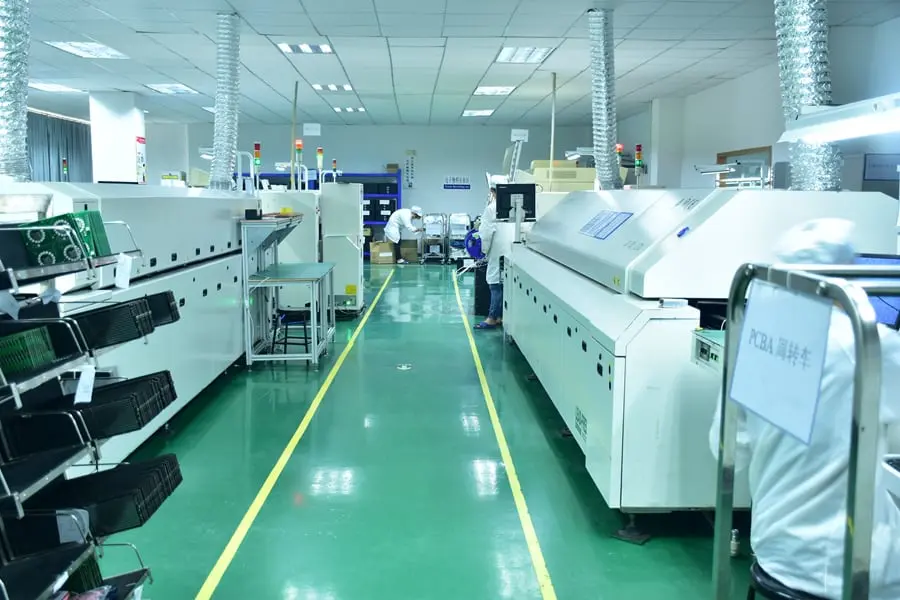
FROM SYSTEM TO BOARD
For chip sourcing and PCBA, start with the exact parts or board revision, expected quantity, delivery needs and required inspection or test evidence.
SCOPE & SOURCES
FPGA.io editorial planning · AI-assisted preparation. Application questions and deliverables are original planning prompts. They do not establish a validated design, customer relationship, certification or manufacturer endorsement.
Manufacturer pages provide application context. Confirm exact component and system requirements against the applicable original documents.